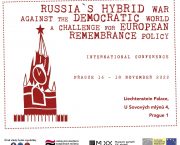
Russia’s Hybrid War against the Democratic World
Published: November 15, 2022
The Institute for the Study of Totalitarian Regimes, The Office of the Government of the Czech Republic, the Platform of European Memory and Conscience and the XXth Century Memorial Museum are organizing a conference entitled Russia’s Hybrid War Against the Democratic World. A Challenge for European Remembrance Policy.

On the Reorganization of the Institute for the Study of Totalitarian Regimes
Published: November 9, 2022
As of 1 October 2022, the highest body of the Institute for the Study of Totalitarian Regimes approved a new organizational structure with six votes from the seven-member Council of the Institute and a new organizational structure within which the reorganization took place, in full compliance with the Labour Code.
REMEMBER: August 23
Published: August 23, 2022
The date 23 August 2022 marks 83 years since the signing of the Molotov-Ribbentrop Pact – an agreement that pave the way for the tragedies of the Second World War. In 2008 this day was proclaimed to be the European Day of Remembrance for Victims of Stalinism and Nazism. This day should preserve the memory of the victims of mass deportations and exterminations. We asked our historian, Petr Blažek, about the history of the Remembrance Day and the events behind it.
We express our support for Ukraine. Putin is manipulating history.
Published: February 25, 2022
Our thoughts are with our Ukrainian friends and colleagues, whose cooperation and help allowed the better in-depth exploration of our shared history of communist dictatorship.
Call for Papers and Student Award – Securitas Imperii: Journal for the Study of Modern Dictatorships
Published: April 21, 2021
The academic journal Securitas Imperii: Journal for the Study of Modern Dictatorships is launching a call for papers for a monothematic issue marking the centenary of the founding of the Communist Party of Czechoslovakia. The deadline for submissions is July 31, 2021.

Research assessment 2008–2018 completed
Published: August 25, 2020
In the past 18 months, ÚSTR underwent an independent international research assessment, which focused on the first decade of the Institute’s existence. The assessment summary is now available in Czech and English on our website.
Czechoslovaks in Gulag website now in more language versions
Published: August 21, 2020
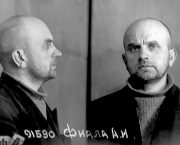
We are launching English, Russian and Ukrainian versions of the Czechoslovaks in the Gulag website. It gives people in other countries access to research into documentation on political repression of expatriates (not only Czechs, but also Ukrainians, Germans, Ruthenians, Jews, Hungarians and Slovaks) in the USSR.

International conference The Democratic Revolution of 1989: Thirty Years On
Published: October 22, 2019
The conference focuses on both national and international context of the fall and transformation of the communist regime. Self-perception of the then student generation, transformative journey of Czech media, changes in Czech society etc. will be topics of the conference’s lectures and discussions. Date: 6–8 November 2019. Venue: Senate of the Parliament of the Czech Republic.

Conference Reshaping the Nation: Collective Identities and Post-War Violence in Europe 1944–48
Published: January 21, 2019
The conference will focus on violent acts occurring at the end of World War II in the context of nationalism as reshaped by previous war experiences. Date: 16 – 17 May 2019. Venue: Karolinum of Charles University in Prague. Programme of the conference.
Discussion with participants in protests against the invasion of Czechoslovakia in 1968
Published: August 13, 2018
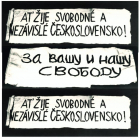
Three of well-known thinkers and movers of the late 1960s – Ágnes Heller, Pavel Litvinov and Mustafa Dzhemilev – will take part in a discussion at the Václav Havel Library on 21 August 2018, starting at 7 p.m. The debate will focus on a comparison of societal changes in 1968 and 2018, particularly in Hungary, the US and Ukraine. Interpretation into English and Russian provided.
ÚSTR exhibition For Your Freedom and Ours in Washington, D.C.
Published: April 10, 2018
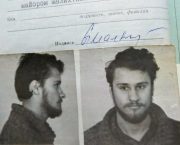
The exhibit was comprised from a collection of over 20 interviews with citizens of the Warsaw Pact countries who participated in protests against the invasion of Czechoslovakia in 1968. Their testimonies, together with documents collected from Soviet, Polish, Hungarian, German, Bulgarian, and Czech secret service and personal archives are the basis of the exhibition commemorating the 50th anniversary of the invasion. You can visit the exhibition at the Delegation of the European Union to the United States, Washington, D.C. between 4 April and 31 May 2018.